In 2013, I tasted a Kenya Nyeri that changed the direction of Troubadour. It was clean, winey, and remarkably sweet, with grapefruit and cane sugar character. That coffee sent me down the rabbit hole. I have never looked back.
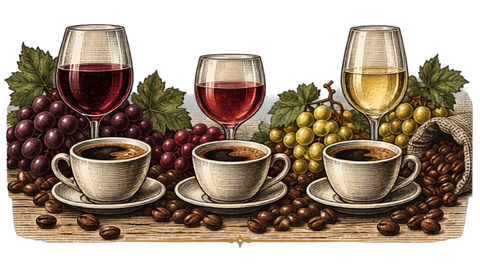
We had already been focusing on origin rather than roastiness since 2012. By 2014, I was explicitly comparing coffee to wine as a way to explain what I was finding in the cup: a sense of place, recognizable structure, and a character that belonged to that particular coffee.

What Coffee Like Wine means
Coffee and wine are both agricultural products. Place, variety, climate, processing, and the choices made by the people handling them all shape what reaches the cup or glass.
Terroir is the way nature’s environment shapes the flavor and traits of a coffee bean. Elevation, climate, soil, variety, and growing conditions become part of what that coffee can express.
The comparison gives us a useful language for aroma, sweetness, acidity, body, texture, flavor, and finish. It does not mean that a coffee will taste exactly like a particular wine. It gives us a familiar starting point for talking about character and preference.
How I taste a coffee
- Begin with fragrance. Grinding releases the coffee’s first aromatic clues.
- Notice body and acidity. Pay attention to the weight and texture of the cup and whether its brightness feels gentle, juicy, crisp, or pronounced.
- Return as it cools. Heat can mask flavor and reduce sensitivity. As the temperature falls, sweetness, fruit, florals, chocolate, spice, and origin character often become easier to recognize.
- Follow the finish. Notice whether it is long or short, what remains after the sip, and whether it leads naturally into the next one.
You do not need to name every flavor. Start by noticing what holds your attention and whether the coffee feels bright or deep, delicate or full, clean or richly textured.
Find your coffee through the character you enjoy
Wine can offer an optional shortcut, but I place every coffee according to what I actually taste in the cup. Here are three useful places to begin.
Bright & Lively

Start with Bright & Lively if you enjoy lift, clarity, lively acidity, and a lighter feel in the cup. Crisp white wines such as Riesling or Sauvignon Blanc can be a useful point of reference, especially if citrus, floral, or fresh-fruit character appeals to you.
Smooth & Balanced

Start with Smooth & Balanced if you enjoy rounded sweetness, composed acidity, and a balanced body. A lighter-bodied red such as Pinot Noir can be a useful reference for this middle ground.
Rich & Full-Bodied

Start with Rich & Full-Bodied if you enjoy depth, substantial texture, deeper sweetness, and a finish that lingers. Fuller-bodied reds such as Cabernet can provide a familiar point of reference.
Processing is a clue, not a guarantee
Processing describes what happens to the coffee cherry after harvest and before the coffee is dried. It works alongside genetics, origin, fermentation, drying, roasting, brewing, and temperature to influence the final cup.
Washed coffees can emphasize clarity. Honey-process coffees can contribute sweetness and texture. Natural-process coffees can bring ripe-fruit character and a fuller feel. These are tendencies, not rules. I taste the coffee itself before deciding how to describe it or where it belongs in our collections.
Why I chose this coffee
I buy from the final cup. A coffee has to meet the quality I am looking for, but it also has to bring something distinctive that the current lineup does not already provide.
Origin and processing guide my first production roast after the sample roast. Then I let the coffee rest, cup it, adjust the roast, and taste it again. A new coffee may spend roughly a week in that cycle before I am ready to offer it.
That process matters because the green coffee changes with age and moisture, conditions in the roastery change, and seconds of roast development can change what reaches the cup. My job is to develop sweetness, body, and balance without roasting away the reason I chose the coffee.
Taste it black first
Black coffee gives the clearest view of its origin and the work of the roast. Additions can hide defects in a lower-quality coffee, but they can also cover the distinctions in an exceptional one.
Take the first sip black and return as it cools. Notice the fragrance, body, acidity, changing flavors, and finish. That is the simplest way to meet the coffee as it is.
How to choose your next bag
Think about the character that sounds good today: crisp and lively, smooth and rounded, or rich and full-bodied. Then consider the details—citrus and florals, caramel and stone fruit, chocolate and ripe berries, a clean finish, or a texture that lingers.

Tell me what you enjoy, and I’ll help you find a whole-bean coffee to try.
Coffee with Tony · Learn your coffee
Next: Washed, honey, and natural processing
Processing is one useful clue to the flavor and texture in your cup. See what those three words can mean.
— Tony