People who come into the roastery for the first time sometimes look over the coffees and ask why we don’t have anything dark.
I understand the question. For a lot of people, “dark” simply means rich, strong, or the kind of coffee they have always enjoyed. But roast level changes what you are actually tasting, and that is where my answer begins.
It starts with why I chose the coffee in the first place.
“We roast so the coffee still tastes like itself.”
Coffee has character before it reaches the roaster
Every coffee arrives with a character shaped by its variety, where it grew, the people who grew it, and how it was processed. Those details are not background information. They are the reason a coffee can taste like chocolate, caramel, stone fruit, citrus, or something we have never tasted quite the same way before.
When we source a coffee, we are choosing it for those qualities. Roasting is how we bring them into balance and make them enjoyable in the cup.
What roasting does
Roasting develops sweetness, aroma, body, and structure. A lighter roast should not mean raw, grassy, thin, or sharply sour. It still needs enough development to be sweet, satisfying, and complete.
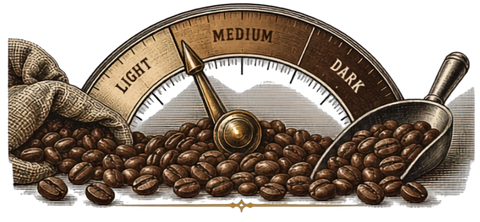
As roasting goes further, though, the flavors created by the roast itself become more dominant. Perceived acidity and origin-specific flavors recede while roast-driven body and bitterness increase. Some people genuinely enjoy those deep roast notes. But when they become the main flavor, different coffees begin to taste more alike.
I don’t want to choose a remarkable coffee and then roast away the reason I chose it.
Where I stop
At Troubadour, I generally roast light to light-plus: far enough to develop sweetness, richness, and balance, while keeping the coffee’s identity present in the cup.
That does not mean every coffee will taste bright or fruity. A coffee can still be round, chocolatey, nutty, caramelly, or full-bodied. The point is to let the coffee itself lead the conversation rather than making every bag taste like the same roast.
If you normally drink dark roast
There is nothing wrong with dark roast if that is what you prefer. It simply is not what I am passionate about making.
Often, when someone says they like dark roast, they are telling us something useful about the cup they want: richness, body, deep roast notes, lower perceived acidity, or a coffee that will hold up in milk. Those are good clues. We can use them to help find a whole-bean coffee that fits what you enjoy.
If you normally add cream to a very dark coffee, there is a good chance we can point you toward a coffee you will enjoy black. Really.
A helpful way to think about it
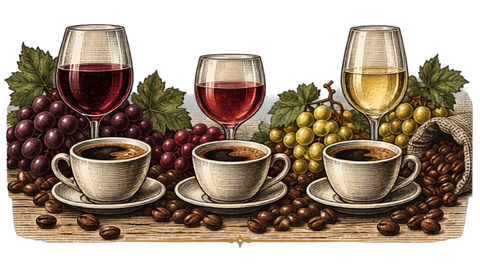
Coffee can be approached a little like wine. Someone who enjoys a deep Cabernet may be looking for something fuller and rounder. Someone who prefers a clean, lighter-bodied Riesling may enjoy a brighter, more delicate coffee. The comparison is not perfect, but it helps move the conversation past roast labels and toward flavor.
If you normally drink very dark coffee black, a brighter coffee may taste sour at first. Your palate may simply be registering acidity it is not used to. That reaction is real, and it does not mean you are tasting it wrong. Start with something richer, rounder, and lower in perceived acidity, then work outward from there.

Find the coffee that tastes right to you
The best place to start is with flavor, not a roast label. Think about what you enjoy: chocolate, caramel, nuts, deep fruit, a fuller body, or something clean and delicate. Then choose a coffee that gets you there.
Open our current coffees and use the Tasting Notes filter to select the flavors you enjoy. The collection will narrow the choices for you.
We roast so the coffee still tastes like itself. Tell us what you normally drink, and we’ll help you find your coffee.
Coffee with Tony · Learn your coffee
Next: Coffee like wine
Roast is only one way to think about a cup. Use the wines you enjoy as a simple way to explore flavor, body, and acidity.
— Tony